La Russia saluta
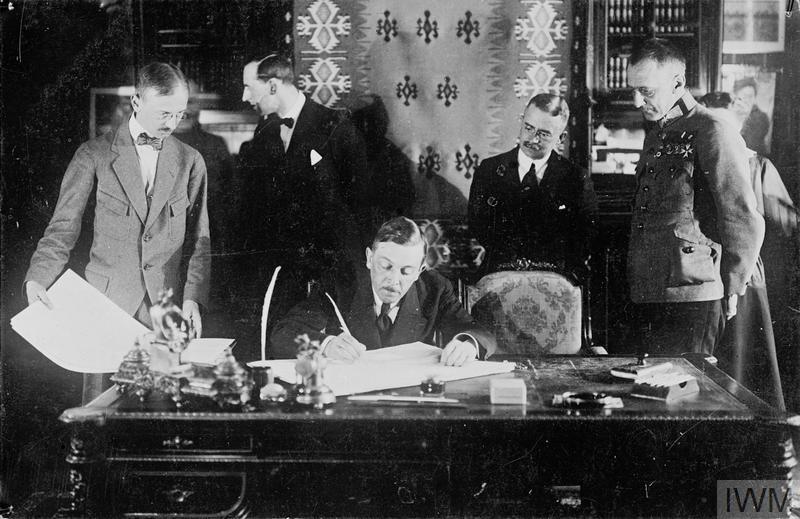
«In seguito al rifiuto tedesco di cessare le operazioni di guerra, ci siamo trovati di fronte a un vero ultimatum appoggiato dalla violenza. Si è deciso di firmare il trattato di pace senza discussione. La delegazione segnala al mondo i procedimenti di cui la Russia è vittima».
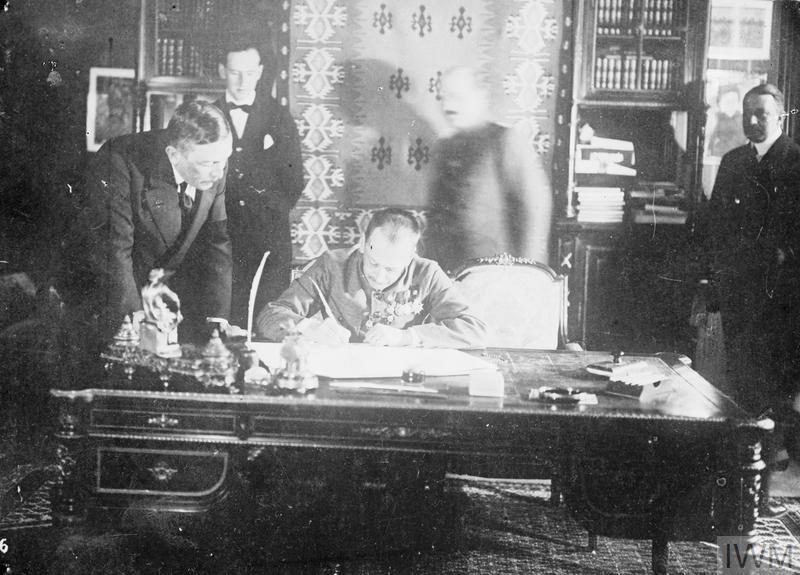
Alle 17:00 del 3 marzo 1918 i delegati sovietici a Brest-Litovsk firmano la pace con gli Imperi centrali e i loro alleati turco-bulgari; le rinunce bolsceviche sono impressionanti. Pietrogrado saluta la Finlandia, l’Estonia, la Lettonia, la Lituania, la Polonia, la Bielorussia, l’Ucraina, la Moldavia e il Caucaso. Più la ovvia restituzione di tutti i territori ottomani occupati. E la geografia è sistemata.
La Russia si impegna a sgomberare subito tutte queste regioni da qualsiasi forza armata, “Guardie rosse” comprese; rinuncia a ogni singola ingerenza nei loro destini e promette l’interruzione della propaganda politica. Disinteresse totale. Al contrario, gli Imperi centrali manterranno una forza d’occupazione per garantire l’ordine pubblico. Il futuro di questo enorme territorio verrà stabilito poi dagli austro-tedeschi, più o meno in collaborazione con le nuove istituzioni locali.
L’esercito russo verrà smobilitato fino all’ultimo uomo; la flotta, comprese le navi Alleate, resterà bloccata in porto fino alla conclusione generale della guerra.
Nessuno pagherà risarcimenti per i danni causati o le spese di guerra, i rapporti commerciali saranno ripresi e regolati da trattati con i singoli Stati e i prigionieri verranno rispediti a casa. Gli Imperi centrali recuperano oltre mezzo milione di uomini.
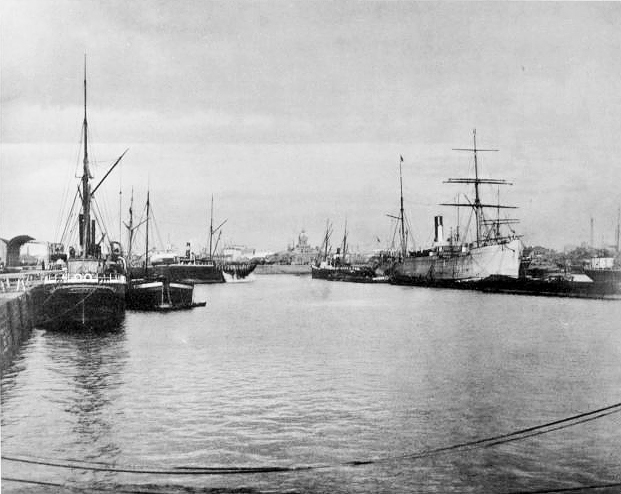
Si chiude così l’ultimo atto sul fronte orientale; Pietrogrado esce ufficialmente dalla guerra sconfitta, umiliata e fatta a pezzi. Viene espulsa dal Baltico, dove gli resta il solo porto di Kronštadt ed è confinata ai margini del Mar Nero. Con le concessioni territoriali la Russia perde circa 50 milioni di abitanti, quasi un terzo della sua popolazione. Non solo, perché quel milione di chilometri quadrati era il più produttivo del Paese: miniere, campi, installazioni industriali; tutto andato. Parliamo della fetta più grossa della sua economia, un danno incalcolabile.
La Russia è come un orfanello di quattro mesi, proprio innocente magari no, ma inoffensiva e indifesa sì. E la Germania ne approfitta, forse più del consigliabile. Lo svizzero Journal de Genève scriverà: «Il principio della pace generale non poteva riceve un colpo più duro di questo. Una pace così concepita è peggio di una nuova dichiarazione di guerra. La data del 3 marzo segnerà per la Germania l’inizio della fine».
Può sembrare un paradosso, ma l’ex Impero zarista resterà un fattore nella guerra, nonostante la firma della pace. Un fattore minimo e non decisivo, sia ben chiaro, ma è sempre meglio di nulla. Già, perché, per controllare tutti quei territori, la forza d’occupazione tedesca dovrà essere più cospicua del previsto, quindi la Germania disporrà di un po’ meno uomini da dirottare sul fronte occidentale. Questo spiega bene quanto fosse importante la Russia, nonostante tutto.
Davide Sartori


GLI AVVENIMENTI

Politica e società
- A Brest-Litovsk viene firmata la pace fra la Russia e Germania, Austria-Ungheria, Bulgaria e Impero ottomano.
- Il Comitato nazionale “Pro Fiume e Quarnaro” comunica alla stampa di Roma una protesta degli Italiani di Fiume, i quali lamentano che il trattato di Londra li abbia esclusi dal ritorno alla madrepatria.
Fronte occidentale
- Intensi raid da parte dei britannici.
Fronte asiatico ed egiziano
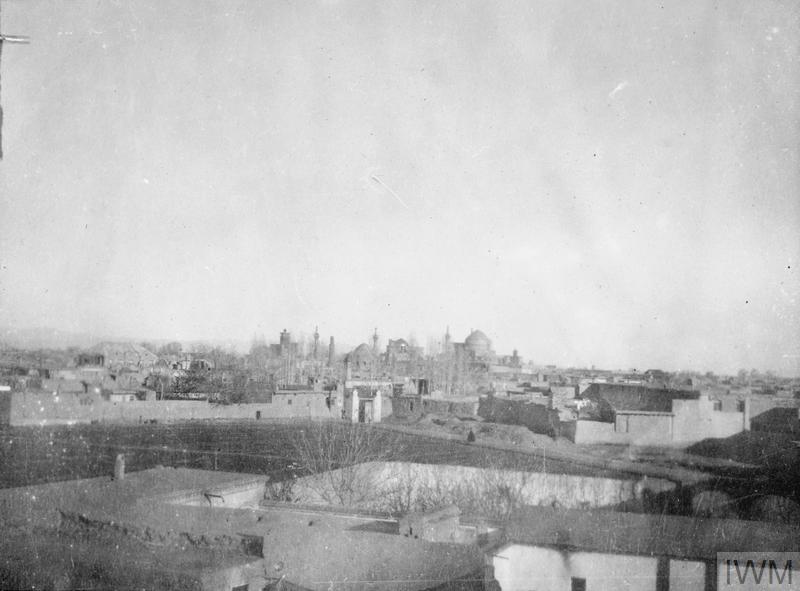
- Meşhed (Persia) occupata dalle truppe del “Cordone Inglese Est Persiano”. [Data approssimativa]
- Palestina: continua l’avanzata britannica, raggiunto un massimo di circa3 km.
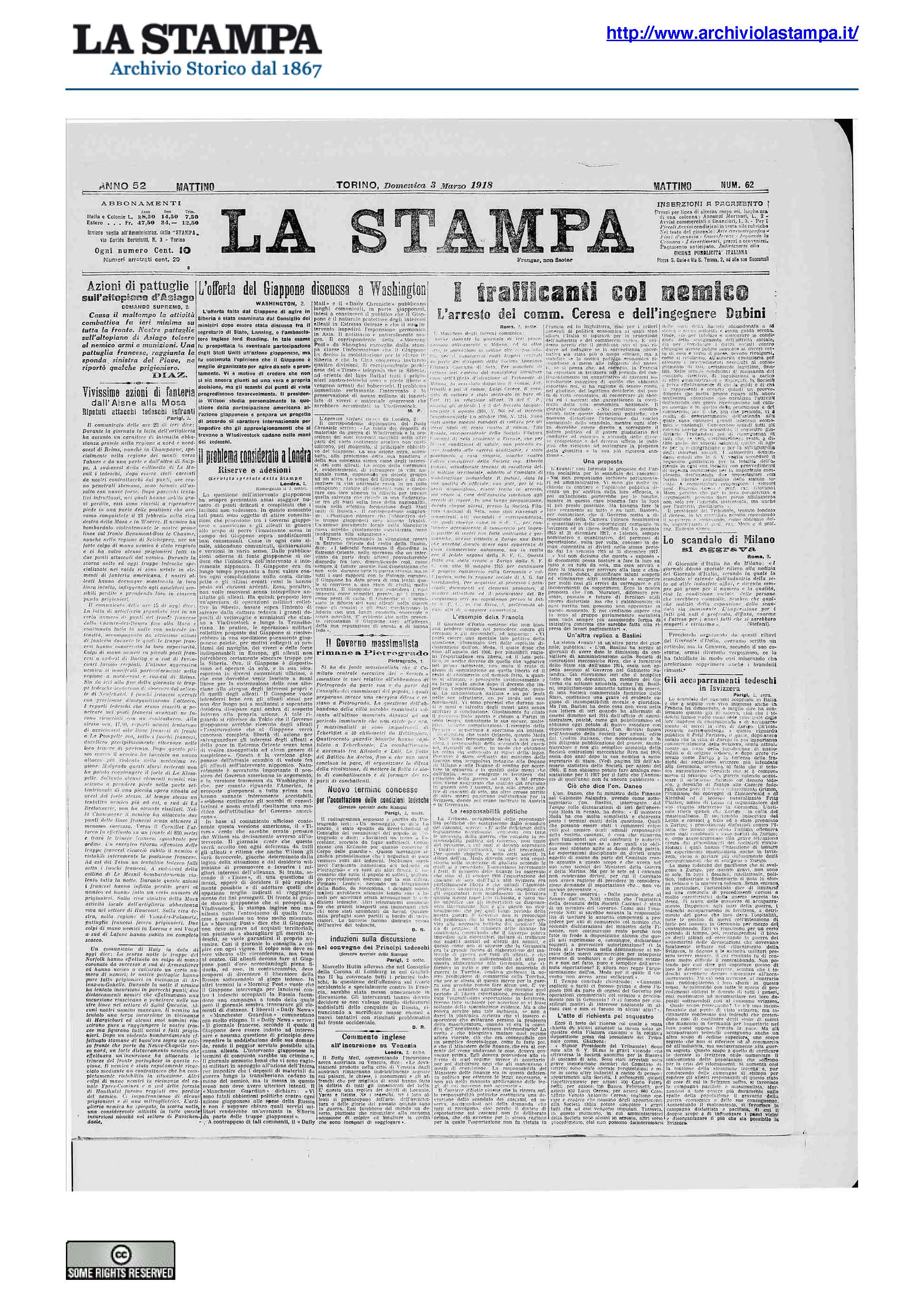
DAL FRONTE ITALIANO

Sulla sinistra della Val Frenzela una puntata di fanteria avversaria, largamente appoggiata dal fuoco d artiglieria, fallì completamente sotto il nostro tiro di sbarramento.
Sul rimanente della fronte le opposte artiglierie svolsero consuete azioni di molestia, da parte nostra più frequenti sull’Altipiano di Asiago e da parte avversaria più insistenti lungo il Piave, a Valle di San Donà.
Condizioni atmosferiche proibitive vietano da più giorni qualsiasi attività aerea.
Firmato: DIAZ
Il Trattato di pace di Brest-Litovsk

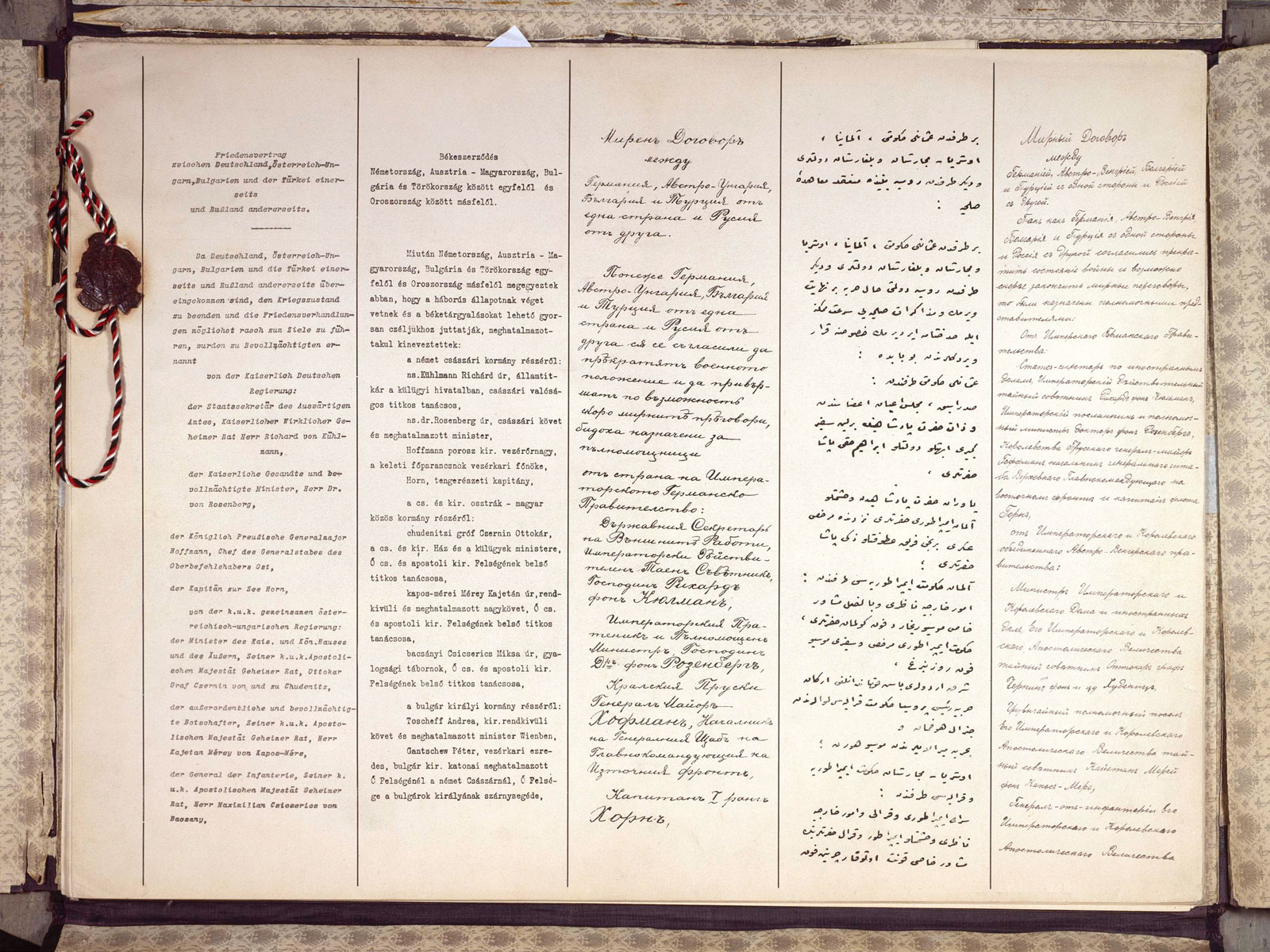
Article I. Germany, Austria-Hungary, Bulgaria, and Turkey, for the one part, and Russia, for the other part, declare that the state of war between them has ceased. They are resolved to live henceforth in peace and amity with one another.
Article II. The contracting parties will refrain from any agitation or propaganda against the Government or the public and military institutions of the other party. In so far as this obligation devolves upon Russia, it holds good also for the territories occupied by the Powers of the Quadruple Alliance.
Article III. The territories lying to the west of the line agreed upon by the contracting parties which formerly belonged to Russia, will no longer be subject to Russian sovereignty; the line agreed upon is traced on the map submitted as an essential part of this treaty of peace. The exact fixation of the line will be established by a Russo-German commission.
No obligations whatever toward Russia shall devolve upon the territories referred to, arising from the fact that they formerly belonged to Russia.
Russia refrains from all interference in the internal relations of these territories. Germany and Austria-Hungary purpose to determine the future status of these territories in agreement with their population.
Article IV. As soon as a general peace is concluded and Russian demobilization is carried out completely Germany will evacuate the territory lying to the east of the line designated in paragraph 1 of Article III, in so far as Article IV does not determine otherwise.
Russia will do all within her power to insure the immediate evacuation of the provinces of eastern Anatolia and their lawful return to Turkey.
The districts of Erdehan, Kars, and Batum will likewise and without delay be cleared of the russian troops. Russia will not interfere in the reorganization of the national and international relations of these districts, but leave it to the population of these districts, to carry out this reorganization in agreement with the neighboring States, especially with Turkey.
Article V. Russia will, without delay, carry out the full demobilization of her army inclusive of those units recently organized by the present Government. Furthermore, Russia will either bring her warships into russian ports and there detain them until the day of the conclusion of a general peace, or disarm them forthwith. Warships of the States which continue in the state of war with the Powers of the Quadruple Alliance, in so far as they are within Russian sovereignty, will be treated as Russian warships.
The barred zone in the Arctic Ocean continues as such until the conclusion of a general peace. In the Baltic sea, and, as far as Russian power extends within the Black sea, removal of the mines will be proceeded with at once. Merchant navigation within these maritime regions is free and will be resumed at once. Mixed commissions will be organized to formulate the more detailed regulations, especially to inform merchant ships with regard to restricted lanes. The navigation lanes are always to be kept free from floating mines.
Article VI. Russia obligates herself to conclude peace at once with the Ukrainian People's Republic and to recognize the treaty of peace between that State and the Powers of the Quadruple Alliance. The Ukrainian territory will, without delay, be cleared of Russian troops and the Russian Red Guard. Russia is to put an end to all agitation or propaganda against the Government or the public institutions of the Ukrainian People's Republic.
Esthonia and Livonia will likewise, without delay, be cleared of Russian troops and the Russian Red Guard. The eastern boundary of Esthonia runs, in general along the river Narwa. The eastern boundary of Livonia crosses, in general, lakes Peipus and Pskow, to the southwestern corner of the latter, then across Lake Luban in the direction of Livenhof on the Dvina. Esthonia and Livonia will be occupied by a German police force until security is insured by proper national institutions and until public order has been established. Russia will liberate at once all arrested or deported inhabitants of Esthonia and Livonia, and insures the safe return of all deported Esthonians and Livonians.
Finland and the Aaland Islands will immediately be cleared of Russian troops and the Russian Red Guard, and the Finnish ports of the Russian fleet and of the Russian naval forces. So long as the ice prevents the transfer of warships into Russian ports, only limited forces will remain on board the warships. Russia is to put an end to all agitation or propaganda against the Government or the public institutions of Finland.
The fortresses built on the Aaland Islands are to be removed as soon as possible. As regards the permanent non- fortification of these islands as well as their further treatment in respect to military technical navigation matters, a special agreement is to be concluded between Germany, Finland, Russia, and Sweden; there exists an understanding to the effect that, upon Germany's desire, still other countries bordering upon the Baltic Sea would be consulted in this matter.
Article VII. In view of the fact that Persia and Afghanistan are free and independent States, the contracting parties obligate themselves to respect the political and economic independence and the territorial integrity of these states.
Article VIII. The prisoners of war of both parties will be released to return to their homeland. The settlement of the questions connected therewith will be effected through the special treaties provided for in Article XII.
Article IX. The contracting parties mutually renounce compensation for their war expenses, i.e., of the public expenditures for the conduct of the war, as well as compensation for war losses, i.e., such losses as were caused [by] them and their nationals within the war zones by military measures, inclusive of all requisitions effected in enemy country.
Article X. Diplomatic and consular relations between the contracting parties will be resumed immediately upon the ratification of the treaty of peace. As regards the reciprocal admission of consuls, separate agreements are reserved.
Article XI. As regards the economic relations between the Powers of the Quadruple Alliance and Russia the regulations contained in Appendices II-V are determinative....
Article XII. The reestablishment of public and private legal relations, the exchange of war prisoners and interned citizens, the question of amnesty as well as the question anent the treatment of merchant ships which have come into the power of the opponent, will be regulated in separate treaties with Russia which form an essential part of the general treaty of peace, and, as far as possible, go into force simultaneously with the latter.
Article XIII. In the interpretation of this treaty, the German and Russian texts are authoritative for the relations between Germany and Russia; the German, the Hungarian, and Russian texts for the relations between Austria-Hungry and Russia; the Bulgarian and Russian texts for the relations between Bulgaria and Russia; and the Turkish and Russian texts for the relations between Turkey and Russia.
Article XIV. The present treaty of peace will be ratified. The documents of ratification shall, as soon as possible, be exchanged in Berlin. The Russian Government obligates itself, upon the desire of one of the powers of the Quadruple Alliance, to execute the exchange of the documents of ratification within a period of two weeks. Unless otherwise provided for in its articles, in its annexes, or in the additional treaties, the treaty of peace enters into force at the moment of its ratification.
In testimony whereof the Plenipotentiaries have signed this treaty with their own hand.
Executed in quintuplicate at Brest-Litovsk, 3 March, 1918.
Come in una macchina del tempo, ogni giorno una nuova pagina del diario.
Le testimonianze, le immagini, i filmati negli archivi e nei giornali dell'epoca.